.jpeg)
Why did you want to work together?
I set out to find a tutor for writing essays. I kept on receiving the same grades, but I wanted to improve my habits when it came to research, paragraph structure and analysis. I found Jaye on Superprof, read her profile and was extremely impressed with the broad range of knowledge she had in literature, philosophy, history and politics. I thought to myself, the skill of essay writing and analysis in the social sciences would be transferrable to business management as it is similar in writing styles and gathering evidence. After the first lesson, she impressed me with her structured, long-term plan that was adaptable for all students. Her student-centric methodology which deepened my understanding in chain supply and logistics as well as developing essential skills when identifying arguments in academic papers.
What benefits has writing played in your life?
Since Year 12, I have learned to appreciate the benefits of writing. I approach writing from 2 perspectives, academic and personal.
The academic perspective allows me to express ideas that are logically consistent. Following from the first premise to the conclusion, I gain a deeper insight into how abstract ideas in logistics and supply chains connect. To be able to express these insights is one of the most rewarding feelings.
I also try to journal every day. I find it to be a healthy expression, reflecting on the day, writing down concerns and the events of the day. It’s a cathartic experience where I can truly express myself without judgement. Also being able to review what mattered 3 months, 4 months or even a year ago puts life into perspective.
What are you reading at the moment?
I am reading 3 books simultaneously which are focused on philosophy, history and a biography of a historical figure. The first book is on the 6th President of the United States, John Quincy Adams. I have a great interest in the history of the United States, especially during the colonial period, I wanted to know more about the son of the second President who kept the fragile republic together during the XYZ affair and the controversial bill, the Alien and Seditions Act.
The 2nd book is Nicomachean ethics by Aristotle, philosophy books aren’t as easy, but I love the process. Following the arguments can be frustrating and vague as its translated from ancient Greek. My passion for philosophy stemmed from taking it as a subject during VCE. I found it interesting as to how our political systems, ethics and the understanding of human nature have been documented and analysed through different philosophical frameworks in history.
Finally, I am reading the Destruction of the Indies by a Spanish Priest Bartolomé De Las Casas. Christopher Colombus is a glorified and controversial figure who “discovered America”, a history that has been distorted by people who want to save his reputation, so I set out to read a first-person account. It denounces genocide and slavery, a truly brave priest, an inspiration to others to speak out for those who have no voice during times of injustice.
What are we working on together at the moment?
Jaye and I have been tackling a few tasks now. In preparation for my final year of my Bachelors, we have been working on deconstructing arguments made by journalists, academics and writers. We choose a topic and an article in said topic, to which we would discuss the thesis, the organisation of the evidence and paragraphs. Then we proceed to pick apart any fallacies in the writing or identifying the main premise of the argument, assessing as to whether the premise logically follows to the conclusion. Any fallacies to be identified, we discuss the counterarguments that could be made. The final exercise is to analyse the structure as to whether its micro or macro, thematic or chronological. It allows me to recognise and appreciate the different styles of writing from a broad range of literature.
What improvements do you hope to make? And what are your goals longer term?
The improvements I hope to make is to overcome the obstacles that bring down the quality of my writing. This includes defining a clear scope which would make the piece rich in material but succinct in application. The other part of my essay writing I hope to improve is identifying and avoiding logical fallacies, building the premise of my argument on a solid foundation is important for creditability and a strong analysis. In addition, maintaining a virtual library in an excel sheet where I keep all the credible information that I’ve gathered through podcasts, studies and books. This is concept that Jaye introduced me to, called the information diet, which has allowed me avoid excessive exposure to sensational content, aligning the in-take of information with my interests and goals.
My long-term goal is to continue to work with Jaye through my post-graduate studies. I wish to specialise in Ergonomics and Human Factors in Aviation, which is an interdisciplinary field that requires fostering great habits when gathering, evaluating and analysing information.
Do you think writing helps you to think critically? Why or why not?
Yes, writing helps me to think critically as it is essential in developing arguments in research assignments. It is truly one of the only ways we can transfer complex abstract theories from mind to paper, to which it can be rigorously critiqued for its rationale. Writing also allows the reader to develop context for a piece of writing, the audience, historical context in which its being analysed, the appeals to certain theories and methodology In addition, when reviewing evidence, critical thinking can apply when deciding which quote or statistic lends the most weight to the argument being made.
.
Thank you James for your time and insight!
Latest Insights
Practical Advice for Students and Families
Real-world learning tips, expert writing strategies, and behind-the-scenes stories from our tutoring experience.
Subtext #10

Subtext #9
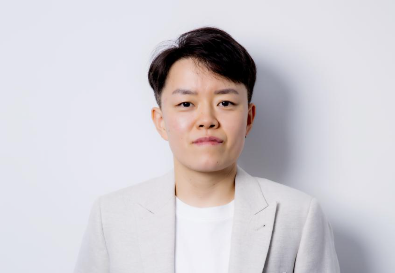
Student's Insights with Eden Zhang
Join Our Learning Community
Get Thoughtful
Learning Insights—
Straight to Your Inbox
Writing prompts, practical resources, and updates from Turtle & Elephant—designed for learners, families, and educators. No spam, just meaningful learning support.