

Latest Insights
Practical Advice for Students and Families
Real-world learning tips, expert writing strategies, and behind-the-scenes stories from our tutoring experience.
Thank you! Your submission has been received!
Oops! Something went wrong while submitting the form.


.jpeg)
.jpeg)
.jpeg)

January 8, 2026
Data Dashboards for Parents: Insight or Just More Pressure?
Learning analytics dashboards make student progress more visible by turning educational data into real-time insights that can support early intervention and self-regulation, but they risk causing anxiety and misinterpretation if treated as surveillance or definitive judgments rather than as one limited lens among many.
TechED

January 7, 2026
Useful ESL Resource: Agenda Web
Summary of resource: I have been using this website for over five years now regularly and find it to be highly useful for my students who are ESL learners. This website has a variety of ESL grammar exercises in areas of grammar such as verbs, tenses, prepositions, word order, phonetics and comprehension. Most useful for A1 and A2 ESL learners.
Another Useful Resource

January 5, 2026
¿Por qué debes escribir tus textos sin usar Inteligencia Artificial?
Escribir sin recurrir a la inteligencia artificial fortalece el pensamiento crítico, la creatividad y la capacidad de expresar ideas con claridad y autenticidad. Aunque la IA puede ser útil como apoyo puntual, desarrollar una voz propia y practicar la escritura autónoma sigue siendo clave para el aprendizaje, la vida profesional y la comprensión crítica de los textos que leemos.
Student's Insights

January 4, 2026
AI Feedback on Writing and Marking: Helpful Coach or Unreliable Judge?
AI writing feedback tools can offer fast, detailed suggestions that support drafting and revision. They become problematic when treated as authoritative judges, as automated scores can reward formulaic writing, reinforce bias, and undervalue voice, creativity, and context.
TechED

January 2, 2026
HyFlex and Hybrid Learning Tech: What Tutors Can Steal (and What to Leave Behind)
HyFlex and hybrid learning technologies combine in-person and online teaching tools to increase flexibility and access. For tutors, selectively adopting elements like high-quality audio, shared documents, and short recordings can support learning, as long as privacy, consent, and genuine interaction remain central.
TechED

December 31, 2025
Classroom AI Platforms: Co‑Teacher or Third Wheel?
Classroom AI platforms promise to act as “co-teachers” by helping educators plan lessons, differentiate materials, and manage routine tasks. While they can reduce workload and free up time for teaching, they work best when used as drafts and supports - not substitutes for professional judgment, local context, or human relationships.
TechED
December 29, 2025
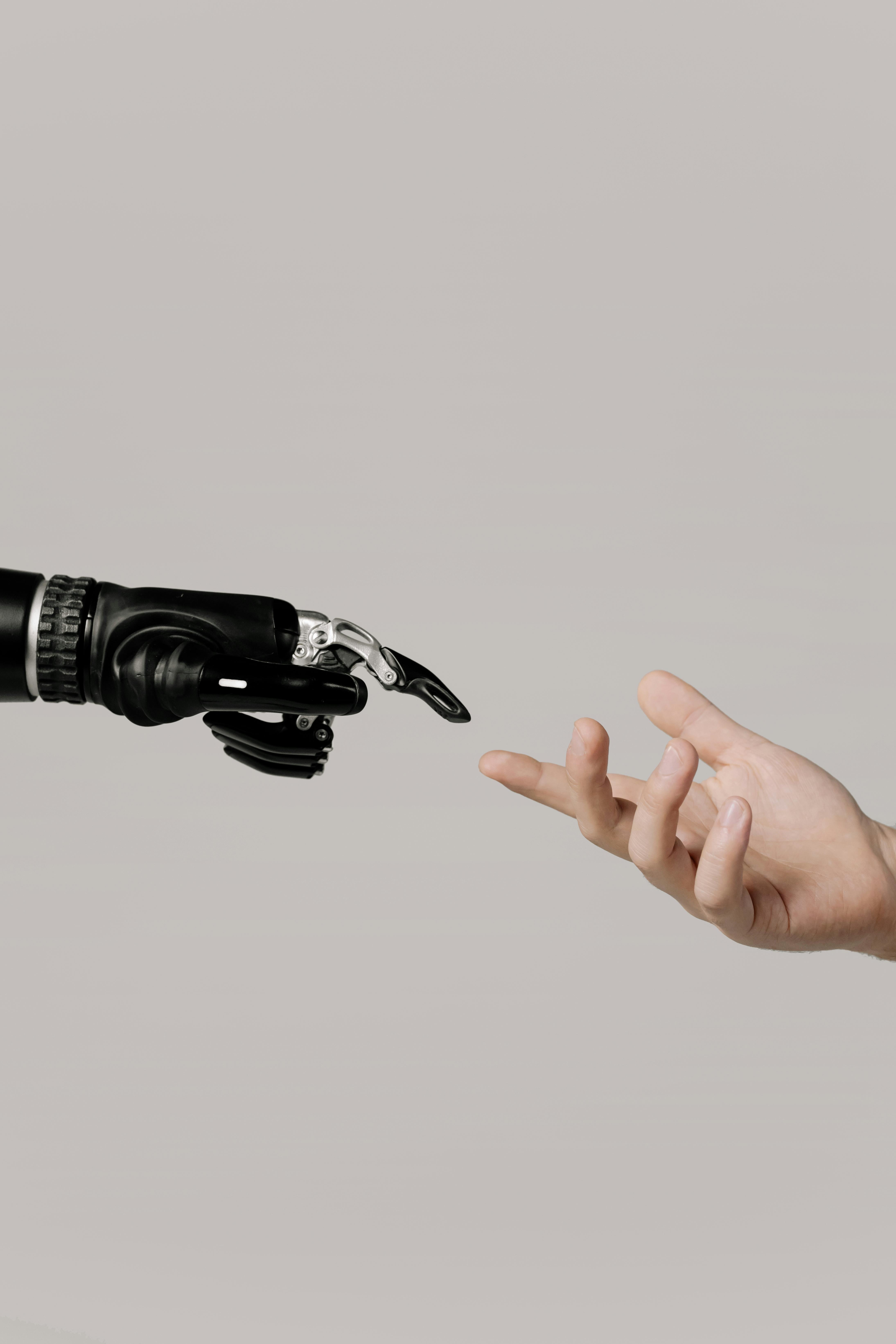
AI Study Companions: How to Use Them Without Losing Your Mind (or Your Integrity)
AI study companions can help students quiz themselves, clarify confusing ideas, and plan their work more effectively. Used without clear boundaries, however, they risk replacing thinking rather than supporting it - making intentional use, integrity, and critical oversight essential.
TechED

December 27, 2025
Human in the Loop: Can Algorithms Really Spot Struggling Students Before People Do?
Predictive “early warning” systems use student data such as attendance, grades, and online activity to flag those who may be at risk of struggling. While they can prompt timely, supportive human intervention, they also carry risks around bias, over-simplification, and mislabeling—making careful, transparent, and ethical use essential.
TechED

December 20, 2025
AI‑Powered Reading and Accessibility Tools: Looking beyond speech to text
AI reading and accessibility tools now go beyond text-to-speech, offering features like highlighting, simplification, summaries, and real-time reading support. When used thoughtfully, they can widen access to complex ideas for diverse learners, while also raising important questions about over-reliance, challenge, and data privacy.
TechED

December 19, 2025
Helping parents with AI Literacy: Teaching students to question AI as part of learning how to use it
As AI becomes part of everyday learning, it’s important for students to understand not just how to use it, but how to question it. This piece shares simple ways parents can help children develop critical, thoughtful habits around AI.
Student's Insights